Aneurysm -Short Edit

A scarred branch digs into my belly. Sunlight passes in streaks through gaps in the leaves. Lime green, grass green, stripes and splatters hide me.

Beneath me, you’re writing, and I need to see. Are you writing about me? This need consumes me all summer. I look for the book in your room.  I follow you after you have written, but you elude me.

I’ve been here since I ran from the dinner table, her voice screaming after me.

I’m too high. I know that the moment you open the book, pull out your fountain pen. The blackbird-song from the orchard battles with your scratch. Can’t see him, can’t see me. I can’t see. One move, I’m no bird, a twig will crack, leaves will betray me.

I can be cat, brown dapples in the green, unseen enemy of small fur and feathers, slide, slip along. The scrape on my legs tells me I’m making progress.

How close must I be? The bough dips, I’m lower still. Can I see my name in there, or hers? You’re scribbling, black scrawl indecipherable.

I lean. Twigs claw my face, tug on my shirt buttons. I put my hands out, grasp the leaves, then I’m flying like the blackbird, and the text is getting nearer, and you look up.

Blackbird wings beat in my head. There’s grass between my teeth, ink on my skin. A torrent of anger in your voice pours over me.

I sort my limbs from yours, as the script scores tracks through my mind.

I can hear her screaming as she thuds down the lawn, … I’m too old for this … you come here now … what will your mother think … I’m not letting you out of my sight again!

Nothing matters, now. I’ve read the words.

Runner – First draft

His tongue was stuck to the roof of his mouth as he woke. He tried to open his eyes, resorted to raising his eyebrows to drag his lids apart. He slid and rolled his way across the ocean of greying sheets, tangled, sweaty, the night had started with one above, one below but now he couldn’t separate them and he thrashed his legs until he made an opening and fell to the floor.

Splinters needled at his palms, his knees. One foot on the floor, he levered himself upright and staggered forwards. He grasped the doorframe and stood, wavering for a moment before lurching on into the kitchenette. He wrenched open the fridge door, seized the carton of juice and slugged it back.

Droplets ran down his cheeks, and he drank more, kept drinking until bubbles and gurgles exposed the end of the carton. He threw it down on the counter. It bounced, hit the floor, and he followed its motion until he was slumped, bare arsed, skin on dirty lino, face to face with the cracked melamine of the cupboard door. The stench of his sweat mingled with stale alcohol rose from his skin, and the always present reek of frying from the cheap bar below.

It couldn’t get much worse, he thought. He was too old, too British, too white, to be naked in a one room apartment in Mexico. He couldn’t take the heat, the booze, the bugs, the dogs. Not now. Perhaps not then. He knew they were coming for him, Jesus and the rest of the Sureños, and laughter dragged itself from his mouth. He was going to be crucified by Jesus. Crucified, shot, stabbed, garrotted, 50 ways to kill your … his long supressed inner English professor battled to the surface, and he retched, part digested juice spurting across the floor. He pulled himself back to standing, and for a moment felt goosebumps rise on his skin, something else long forgotten during the months on the run across the southern hemisphere. Cheap countries, cheap plane tickets, no questions asked, his tweed jackets and brogues had been discarded long ago.

He longed for a shower, or maybe a bath, a long, deep, luxurious bath. He wanted to be somewhere cold, damp, grey, where you could come in from outdoors to a glowing fire, tea and crumpets, then retreat to a steamy bathroom and soak, reading a good book until the water went cold. Somewhere, he knew it had never really been like that, but hell, he could edit his memories if he wanted, especially if they were about to be cut short.

No shower, no bath, he filled a bucket with water from the single tap and poured it over himself, the floor, the spreading lake of piss and puke. He didn’t give a fuck if it dripped through the ceiling. Part of him wanted to stay, to wait for the inevitable and say, ‘Kill me now’, but the death drive wasn’t strong enough to combat his innate desire to live. He tugged on a pair of grubby chinos, a once white shirt and battered leather sandals. Picking up a back pack, stolen from a tourist who looked enough like him to confuse things for a while, he climbed out of the window, slid down the tin roof and dropped the last few feet onto the ground. A glance around, and he was in the old truck, hot-wiring it, checking the fuel gauge, foot down, head for the border. Another border, any border.

One day he’d stop running, but not today.

Room – First Draft

Women have always done it, unrecognised, hidden. And even once allowed, we deny it, because being allowed in itself takes something away. Who offers the permit, and do I want it anyway? I may continue to write in secret. No-one will know, either way.

it’s warm and dark red and the woosh-thump-woosh-thump’s always there, and I’m on my own/never alone safe warm nourished part of you and that’s all I want and ever need

jerked screaming, fighting every push and brutal squeeze, too bright, too hard, can’t go back, let me back let me back, let me in … skin touch soft warm fill me keep me safe together

I have a room where I go and close the door so no-one can reach me. It seems like I’ve had it forever, but there must have been a first time that I discovered it. Everything has a beginning …

rewind until I can hear her screaming at me, until she’s grasping my wrist, and I’ve done something wrong and I don’t know what still don’t know, and her breath smells and I look up into her eyes and know that I’ll never be right so I need to vanish. I stand still, her bone-witch fingers surrounding my wrist, and as she shouts down at me I can’t move. Tell me it will be okay, but there’s no-one else but me and her and brick by brightly coloured brick I build until I vanish. I’m gone where she can’t touch me anymore and that’s when I find my room.

Ten years on, my room has materialised. I learned to read and a door opened into somewhere I never knew existed. I can retreat until I don’t hear the screaming anymore. And when I’m all wrong, don’t fit it, don’t get the joke, can’t play with us, my room’s still there, where I can’t be touched. John Peel’s on the radio, though, and I believe that somewhere there’s a way out.

In time, I discover that I was right, and I pretend the room’s gone. I watch as the sky fades, blue, green gold, to darkness, setting sun, silhouetted trees and chimneys. I’m in the attic, real room of my own. Mismatch thrift shop furniture and peeling wallpaper spell freedom. Rent paid, I can enter and leave when I want. I lie on the worn grey carpet and reward myself for each page I write, each sunset I paint.

At night we drink and smoke and dance and the music’s louder than my heartbeat, until the sky lightens from navy to turquoise again. Milk fresh on the doorstep, we stumble back indoors. And later when I’m heaving the night into the toilet, my t-shirt clings against my skin, and I go to my room, but I’m not telling anyone. I creep in, furtive, would never tell, never share, can’t admit that the room’s still there.

I’m spent, another night, red wine in jugs you can’t tell how much you drink and we were laughing so hard my throat’s sore and my ears are ringing and now it’s all stopped, and I’m chilled, skin clammy, but inside my head is quiet and I’m not dangling on the edge of madness, won’t see a counsellor, see her, won’t see her again.

Another ten. I’d get up if I could but the gap in my symphysis pubis is too large, and the baby stretches my belly, I’m seventeen stone at my biggest, and my mind has slowed like my steps. The sun shines in, cats rolling on the golden carpet. My world has titrated down to one room, can’t diminish any further, but it’s not the room I was thinking of.

I’m never alone, and it’s eating me and I want to be one, own, me, gone, and the drugs take the edge off and gradually I claw back a tiny place that’s my room. I can sit still, feed the baby, watch birds in the garden and think. There’s something new, though, and it glows green as I realise I’m not allowed to be alone.

Maybe the end should have been when I delivered the baby, but I’ve found that’s not an end. And now, behind a barrier of books, I am rebuilding my room, stealing back moments to write. My desk is tall, broad, blue-stained, grain of the wood still visible, family photos backdrop my thoughts. Does time need to be scarce so I write every word?

Mum, mum, I need a drink, did you get more eggs, can you wipe my bottom, can you drop the car at the garage, what’s for tea, I’m going to be late, can you help me with my homework, you never told me it was parents’ evening, where’s my socks, I need a lift, is there more cake, he’s got all the socks in his drawer, that’s mine, I want it, it’s not fair, I want, it’s not fair, I want, I want, I want …

Toxophrenia

  1. Twenty seven days. Feverish, I ask the doctor why. He looks at my notes, yellow folder telling him nothing and everything.

It will pass, he says.

Everything passes.

Take paracetamol, he says.

Universal panacea. Won’t it harm the baby?

It’s your first, you’re bound to be anxious.

  1. Anxiety knows no bounds as I lie there and sweat.

Do you feel the first lump, or do I?

It’s just your glands. You must be fighting off an infection.

Late night screen glows with possible diagnoses, cancer never far from mind.

My stomach grows, skin stretched taut, and I daren’t ask.

We … just … need … the … months … to  … pass.

And one day the lumps have gone anyway and I don’t think again, awash in breastfeeding.

Anti-apoptotically, your host cells persist and replicate.

Pro-apoptosis effector proteins, are disrupted,

Conformational change,

Proteins stymied.

The host will eat itself,

T.gondii triumphant.

  1. It’s amazing how quickly time passes with one young child, then a second.
  1. The first trace is a splash of yellow, bordered with black on the glowing red-orange of the back of his eye. Technology is marvellous, the doctor says as she shows me on the screen.

Can you cut it out, I ask.

It’s been there for years. He has two eyes. If you hadn’t had his eyes examined he might never have noticed.

Perhaps we should have remained ignorant. We were never meant to see the inside of our eyes.

  1. Is it obvious to everyone else? Omniscience is inhuman. Who knows?

I didn’t. And if I had known what could I have done?

I’m up late on the internet again.

Raw meat, soiled fruit, catshit? Nausea comes, years too late.

  1. Late nights are typical of teens, I read. In fact, it’s against nature to wake them early.

Let them sleep.

It’s normal for boys to become uncommunicative.

Of course it is.

It’s not normal to see things, hear things, that no-one else can perceive.

By then it’s too late.

Knife descends, repeat, and I wish I could have cut it out years ago.

Origin of self FINAL EDIT

A clap of wings startles me. The seagulls circle, then go back to the cliffs. I continue down the beach. My pelvis adjusts as pebbles shift and roll. My hips rise and fall, impressions on my feet. Stone-pain seizes my focus.

At the edge I hesitate, can’t do it again. A moment, you’re always too cold, but still I throw myself into you. Draw heat from me, I want to fill your lack. Always my gift dissipates too fast. You’re implacable: I’m bereft.

I kick off again, release, float, push against you, pull through you, surge, immerse. And beneath you, I’m gone. Moment in green. Perfect vision, until everything blurs, clears, blurs, salt filled eyes, mouth, ears.

Too much, I sink, stop, stand, relief in stone-made pain. I gasp. I’m not you, still within my depth. Still I ask, ‘Draw me out, write your name on me, gouge it in my skin’. I should stay, there’s safety at this edge, but I release the rock. Be in me, fill me, take me over. For a second I surface, breathe, submerge again. I’m in you, of you, and you enter me, every hole: every cell of mine takes you in, and my feet feel sea, just sea.

And it’s never enough.

Afterwards, I lie where the waves pour over me, in and out. A little way up the beach a dog’s nails scratch over stones, sharp against the hush of the waves. The seagulls circle again, screeches breaking the silence of the seas. [1]

Slowly, this time, so slowly. I descend. Spasm, contract, breathe, forced slow exhale, then down again. Painful pause, I crumple at your edge, inhale. Your waves reach out. At bursting point, I crawl until I’m in you, then I lighten. I need you as my body spasms, ice cold some relief. Contract.  Half standing, half floating for a moment, stones scrape my knees as I fall again. I scream, exhale, pant, breath subsides.

Hips widen, pelvis shifts, I open, push down, face full of salt, womb screaming, I give you more of me, all of me. I submerge, flow into you, expel it, release with one last surge …

It’s only instinct makes me hold him, warm against me, no breath yet, until we surface, dual gasps, both scream, bereft.

[1] Royle, After Derrida p56.

Aneurysm (2nd EDIT)

Aneurysm

Stumps from a scarred branch dig into my belly as I lie here, but you can’t see me. Sunlight in streaks passes through gaps in the leaves. Lime green, grass green stripes and splatters hide me.

Down there, you’re writing, and I need to see. This need consumes me all summer. Are you writing about me? I try finding the book in your room.  I follow you after you have written, hunting your secret, but you detect me, elude me, two years more in the world enough to give you every advantage.

So I’ve been here since I ran from the dinner table, her voice calling after me. This time I was the one who eluded capture. I wore green today, I planned this as I pulled on a pair of your old shorts. She raised an eyebrow, said nothing at breakfast, nothing at lunch. She looked, though, and there’ll be plenty to say when I get back.

I’m too high. I know that the moment you open the book, when you pull out your fountain pen. The blackbird in the neighbour’s orchard competes with your scratch. Can’t see him, can’t see me. I can’t see, your script too tiny from my vantage point. I lie, branches burning into my belly. I am only invisible as long as I stay still. One move, I’m no bird, a twig will crack, leaves will betray me.

I think like our cat, brown dapples in the green, unseen enemy of small fur and feathers. I can be cat, slide, glide, slip along the branch. I know from the scrape and burn on my legs that I’m making progress.

I pause. How close must I be? The branch dips, I’m lower, lower still. Can I see my name in there? Or hers? You’re scribbling still, black scrawl indecipherable.

I stop, lean, peer. The branch scrapes at my stomach, tugs on shirt buttons as if I’m moving. Twigs claw my face and I put my hands out, clasp the leaves, then I’m flying like the blackbird, and the text is getting nearer, and you look up and   I   can   read   …   every   ///   word  …


Let me entertain you drives through her head as she focusses on the blood. It’s important to make the grey of the blade more silvery, to make the blood stand out, the red more crimson, oldword for #DC143C, for #E30022, and she shudders at the imprecision. How can she replicate the experience, seen onbrain across the ‘verse, if there’s no exactitude? She needs the feed as the music swells in her mind. Little Bo Peep has lost his sheep, He popped a pill and fell asleep. She shifts, cold metal bar pressing against her thighs. Grand-mère said that they used to have cushioned seats, adjustable seats, seats to make sitting at the computer for hours more comfortable. She remembers the sentence, but the meaning twists. Computer, a stand-alone box of circuits, heavy, clumsy. Apparatus. Apart. Sitting at the computer, like you could leave it. A tremor runs through her at the thought of not being connected.

She swipes in the air to heighten the #ED2939, increase the shadows of the giant dovetech’s incisor as it carves through the skin to make the glint of the metal that little bit brighter, pulls at the code so that man’s guts spill out towards her, zooms in on his screaming face until you can tell when he last shaved. It’s going to be the full VR experience, for everyone, onbrain.

She steps back to view the scene better. It enlarges anyway, no need to step back, and the soft wall reminds her of this. One day she won’t need her body, her cell, one day everyone will be in total VR, no need for this futile human dance.

Maybe in the next box, maybe thousands of miles away, someone else is enhancing the sound, the smell, and as soon as they are done, as soon as the scream reaches the right intensity, as soon as it balances the clash of the dovetechs, the thud of their mechanised limbs, and as soon as the rust-metal smell of blood and oil is embedded, this episode will feed. She fizzes at the thought that her #DC143C, her #808080 will be viewed in everyone’s minds tonight. Perfect entertainment.

She pulls her hands apart, zooms in so she can see what no-one will notice. She scans the background and somewhere there’s a blackbird singing. Shouldn’t be there. Has to be erased. A twitch, pain sparks from her neck, shoulder, arm, hand, forefinger and she’s found the small black shape, zoom in. Onbrain, there’s a spark, she twitches again, and tremors shoot down her spine. Maybe it’s the bird where it shouldn’t be. They’re nearly all gone now. A vicious jab in the air with her shaking hand and the birdchant stops. The sparks stop too and she leans back against the padding, sweating as she slides down the wall.

The song loops back to the start, pounding bass, screaming vocals blacking out the pain. Hell is gone and heaven’s here, and she can see the redbrown stains, dried #c4302b on #d7000 and a faded #A81C07. One hand flickers, and if she could, if this was VR, she#d heighten the #A81C07, soften the rough beige cotton that lines her cell, /// erase all trace of her blood, #erase the walls, wipe out this cell and the next and the next,/// and take away the bloodstains on the soil and #paint the world #3DF500.

Shades of green machine, lime, and grass shoot through her head. She lolls to the side, spring green, Persian, olive, Kombu, Granny Smith, jungle, laurel, rifle green speed towards her face, three dimensial VR, onbrain gone wild as she smells, she tastes, the blood, the oil, the earth.


I can read the words now.

Blackbird wings beat in my head, ants scurry along the lines. There’s grass and mud between my teeth, bruise on my cheek, ink on my skin, and a torrent of anger in your voice pouring over me.

I try to sort my limbs from yours, but the script still scores tracks through my mind.

I can hear her screaming as she thuds down the lawn,

… I’m too old for this … you come here right now … what will your mother think … she left me in charge … I’m too old for this … you’ll give me a heart attack … I’m not letting you out of my sight again!

Nothing matters, now. I’ve read the words.
Perfect (FIRST EDIT)

It’s perfect, she says, as she stands outside, keys in hand. The house has classic proportions, a pillar either side of the front door, well groomed box trees, a semi-circular drive. It is perfect, or very nearly perfect, she thinks as she notices the leaves on the lawn, swirling in the first autumn winds. She walks closer, raises her hand to insert the key. The door is perfect, anyway, a matt grey finish, framed in white, exactly as she’d specified. No chips. No scratches. She looks at the edge of the brushed chrome lock more closely.  She can see a scratch where someone else has put their key in, a clumsy, hurried builder perhaps. That can go on the snagging list that extends to three pages. Inside the rectangular hall, the smell of new paint reassures her. She is careful to wipe her feet, it would be a shame to get dirt on the ethically sourced coir mat, but more of a shame to damage the perfect lines of the oak floor. She slips off her shoes and pushes one French-manicured finger against the shoe rack door. That fits perfectly, works perfectly, as the soft touch open and close mechanism glides, offering her a pair of soft cream leather pumps. Indoor shoes. Everyone should have indoor shoes and she wonders for a moment whether she should get a set in every size, in case of visitors. Because there will be people coming inside, and she shivers. Perfect. This house is perfect, with large reception rooms, plenty of spare bedrooms, perfect for visitors yet still she doesn’t want anyone else here.  Perhaps another few days and she can think about … She shivers again. She should slip her coat off now, coming into the house that’s what you do, but the house is cold, she’s cold, so she goes to the kitchen. It is easy to turn the heating on, harder to fill the kettle because that makes splashes, and she has to wipe them up, and the counters show where she’s wiped so she polishes them again while the kettle boiled, soft pink microfiber cloth, only for polishing the counters. And it’s easy to get into the rhythm of polishing, following the long lines of the black marble counters, and she startles when the kettle clicks off. Earl grey, lemon, no milk. She wipes the cup before she pours, wipes the square chrome tea caddy, wipes the teapot, wipes the kettle. Perfect again. The aroma is nothing like the stink of the tea from that machine, at that place, or the cup the nurses brewed for you, it’s from the staff room, love, they mean to be kind. She sits at the glass table, and runs a nail along the scratch. She should have replaced it really, nothing to remind her of … She doesn’t know why she kept it, everything else is new. She puts her cup on the place where the scratch is deepest. It’s a good thing it’s glass, so easy to clean. Really hot water, some bleach, and you can’t tell that there was blood. Maybe she needs one of those ultraviolet lights, like on the crime show, so she could see if the blood really is gone. She looks at the walls. Matt White. They’d stripped everything out. She stayed in a hotel near the hospital while the builders were in, making choices, visiting every day, without getting too close. Even in hard hat and overalls she had to shower when she left, shower before she made her other daily visit. She felt dirty after that too, but in a different way.  Wash your hands, it says on the way in, and she wonders whether the visitors would object if she offered hand sanitiser in her own hall. Stop the spread of infection. A shudder. Thousands, no millions of tiny germs spread on her skin, his skin, on the kind-meaning hand of the nurse, of the doctor, and did gloves really act as a barrier, how did you know if the gloves were clean too? She sips the tea. This mug is clean. Bone china. She always soaks the dishes, and when it is just her it is easy.  It will be better now she can sleep at the house again. It will be better as long as there are no visitors. It will be better until he comes home. Bile rises in her mouth and she tried to settle herself with another sip. He will come home and she wants him to, and she can’t bear to imagine him here again. They talk about it, with him, without him. First, a visit. They will see how he reacts. Then maybe a weekend. Then every weekend, and she digs her nails in as she thinks about his presence. Perhaps if she takes him clean clothes, ones that haven’t been in the hospital for months, ones that haven’t gone through some communal laundry with everyone else’s, ones that she has washed herself. She thinks of the soft grey joggers and cream cashmere jumper still hanging in his wardrobe. She didn’t ask them to redecorate the bedroom, but she had cleaned it, cleaned it until she was sore, and the mirrors shone, and every item had been dry cleaned, and it was all in bags. He won’t find anything amiss when he comes back, when he goes upstairs, their room is just the same, because it happened down here, and she thinks again of the ultraviolet light. Were there any traces of blood still, even after the walls have been re-plastered, the floors re-laid? Will he be able to tell? She had explained to him about the new kitchen, but she doesn’t know if he took it in. He just sat there, but that was at the start.  He is better now, he responds when she speaks, but she hadn’t mentioned the kitchen again, nor the lounge. She stood up and put her cup in the sink, ran the tap until the water was scalding, added bleach. It could soak. She thinks about sitting in the lounge, reading a magazine, until it is time to visit.  The new Elle thumped through the door this morning and it is sitting on the new wooden coffee table, perfectly aligned to the table edge, which is perfectly aligned to the rug that sits square in the centre of the big, light room. She stands at the door to the lounge, grips the white door frame, but she can’t go in, can’t sit there, hasn’t sat there since, since he … He’d started in the kitchen, taken a knife to his arms, sat at the table, stabbing, slashing, but that wasn’t enough and he’d walked, run, stumbled into the lounge, and at some point he’d fallen onto the coffee table, knife still in hand, and she couldn’t get rid of the image, blood crimson on the cream carpet. Redecorating should have solved that, the new carpet is beige, not cream, the table wood not glass, but she can still see the giant shard of glass penetrating his gut, as blood streams from his arms, and she turns away. Standing at the hall window she looks out on the lawn, stretching out until it reaches their woodland, trees thinning until they become farmed fields. The gardener would be coming later, restoring perfection to the soft green lawn. It’s everything, this house, she has everything that money can buy now. And he’ll grow to appreciate that again, won’t he? The clock chimes in the hall. In another hour she can climb into the BMW, set the satnav for the hospital, and visit him.  She doesn’t want to go, knows she should. He’s not allowed out, not yet, and she should bring in something from outside. But she stays at the window because she can’t face the florist, because she’d have to speak to them, and if they ask, ‘Is it a gift?’, she’ll feel like they know, and what does she bring him anyway, when he’s shown that he thinks the life they had together, however perfect, is worth nothing, when he says it’s not how he thought life would be, that no amount of luxury and leisure can replace the tiredness that comes from graft, and that no amount of money, no possessions can replace, for him, a messy family home, bursting with the children she can’t have. She breathes in deeply, and runs her fingers down the hand woven damask curtains, dyed to match the rugs on the beautiful oak floor. She keeps on looking out at the fields, and for a moment she wonders why she’s still wearing the coral cashmere angora mix coat, and she isn’t crying, because how can you cry when everything is perfect?

And in the news today …

Giacomo Balla“It’s a swan on the road. Why the fuck are we writing about a swan on a fucking road?”

“It’s not the words, Bill, it’s the pictures. Picture sells a thousand words. No one buys the fucking paper now anyway. It’s all about clicks and shares. Citizen journalists. Anyone can take a photo on their iPhone and it’s in the Mail. You get writing the subhead and be glad you’ve got a job.”


giacoma 2Do you know the feeling of vibration, shaking the floor, when the washing machine is on? Imagine that, a million times over, the whole building pulsating, from concrete floor to corrugated ceiling. That’s what it’s like when the printing machines are on, and they’re always on, and the sound courses through my skull, my spine, right down to my toes. There’s a back-up generator, the news must get out, and I’m used to it now, the spin and the rattle and the crunch and the click, the beat as familiar as that of my own heart.

And like coming to shore after a sea voyage, missing the sway, they say, it don’t feel right when there’s no vibration, no clacks and whirs, and that’s something I never thought would happen.

They said they could see it coming. I didn’t. Sure, things changed. They stopped charging for the Standard, had to after all those free papers took off. But it was still papers, wasn’t it? More of them, if you judged by the tube at the end of the day. Someone should have done something. I mean, what about the jobs? There were hundreds of us, even with the move to Wapping. Thousands if you counted the men selling papers all across town. Papers needed people, people would always need papers, or that’s what I thought.

The building sounds lost now, or maybe I’m lost without the noise, unused to hearing my footsteps echo, and it wasn’t just machines, there was always a shout going up, people coming in, vast reams of paper being delivered, processed, printed, chopped, folded, and taken away again by the fork lift truck. It’s all gone, now, and next week I’ll be gone too. We don’t need a caretaker for an empty building, they said. Don’t take care of it, no-one needs it, it’s all about cutting costs. I sit half way up the metal staircase, watching the machines lying still, and feel my heart thump in my chest.


The news will still get out. No early morning paper boy, it seeps now, rather than thuds. It’s a silent swipe, and you’ll see what someone else has read, and follow the story, click and share, but then it’s time for a quick game of Candy Crush and what Gina did last night and you’ve gone again.

The news will still get out, but you can select what you want. No need to plough through grim items about Gaza, economic analysis of the cost of going into Syria, of bombing Iraq. Deselect, it’s gone, and all you see is cats stuck in blinds, news of the bake off, and is it really news if Diana did, or didn’t take Ian’s ice-cream from the freezer?

You choose what you consume. Don’t get indigestion.


‘Swan holds up traffic’

“Look, Mum, its wings are as wide as that lorry.” Click, click, share.

“Bet it caused a real traffic jam.”

“Can you imagine picking up a swan, isn’t she brave? I wouldn’t want to work for the RSPCA.”

“No swans here, anyway, and who’d stop for a seagull?”

“Well they can fly, they wouldn’t need picking up.”

“Can’t swans fly?”


It’s thrashing in her arms, strength enough to break a bone she’s heard, but she’s not scared, it’s her job. She grips more tightly, too tightly, and the swan goes limp.


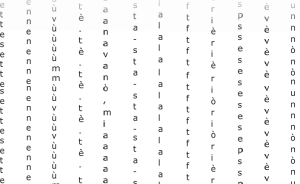
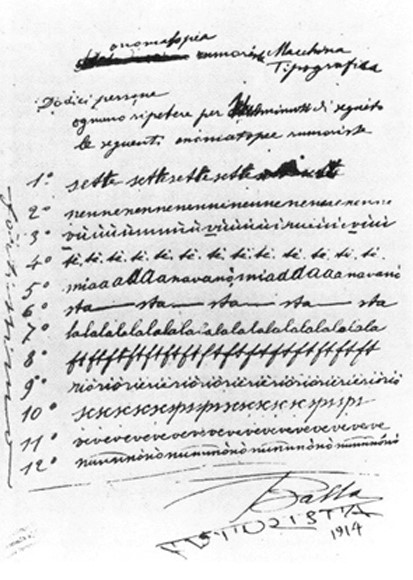
Sound poem images are from Macchina tipografica (Printing Press) by Giacomo Balla

Swan

It shouldn’t be there, its white body soft against the tarmac. What a place to sit when there are fields all around.

Snow-bright in the sunshine, I can see it from a few hundred yards away. And, keep your eyes on the road, I start looking for her mate.

Slowly she stands, unbothered by the cars passing, inches away. She unfolds her wings, stretches, pushes down against the air and takes flight.

Beat, beat. Each stroke raises her higher.

Beat, beat. Higher, and closer to the traffic.

Beat, beat.

“No!”

The huge bird, wingspan seeming as wide as the car, is flying at the big green truck in front. She has to be high enough, she must. My stomach clenches and I grip the steering wheel.

Another beat, then another. Time slows even though we’re doing sixty, and my vision fills with white on green.

A gust of air, some slipstream surge, and she skims over the truck.

I release my grip, then tighten again as I see the low stone bridge. The truck, the swan, the stone, sandwich together, and all I can do is watch and wait for an explosion of feathers, a thud.

The swan is buffeted by curls of air, compressed and swirling under the arch of the bridge. She swerves, hits the trailer, and ricochets towards me. On the tarmac now, she falters, flapping again, no lift. I push my foot down hard on the brake, and wait for impact.

Somehow she rises. Wings power and she curves across both lanes of traffic. White light glows between the ribs of her feathers. She soars over the fence, circles the field, then she’s gone. Maybe she’s finding her mate, but I’m left, sweat damp between my hands and the faux leather wheel.

My heart thumps still as we pass Settle, and somewhere a feather touches the asphalt.

Second edit: been cut before EDITED

I can’t let you see me.

And they were all celebrating while I bled.

Don’t look at me, not there.

We were dressed like dolls, toyed with, dark-skinned Barbies, just babies when, gems glittering can’t distract from tears, she made the cut.


Not down there, I know it’s why I came, but please, not now.

They’re singing in the courtyard, shrill ululations echo, my scream unheard.

You’re not listening either, my presence in your office permission enough. I’m screaming, ‘Don’t touch,’ but nothing comes out.


Take off your dress, she said, and you say it too. I can still smell the perfume, even as you disinfect your hands. Lie down, she said. I lie, your bed an invitation, curtains drawn.

Open your legs like a good girl, she said. You stand and wait for me to open my legs, but I’ve been cut before.


I push down the skirt. Not now, I say, I can’t. I’ll book again. And on the street I can hear sirens screaming for me.


The bride price is high.

Your invoice arrives, despite my refusal.