Knife-edged Love

If you are broken I might be enough

sun in my eyes blind me to what stands

stone grey sea rise and fall with my heart beat

worship me you say

my fingers freeze

waves ride in relentless sea

wind in my hair

feet enclosed in fur lined boots

worship is not enough

I stay hidden

ice at my breast

unceasing sea turn me over

sun warm on my eyes

grey white winter skin and hair


what I want is fractured

knife edged love

chill freeze my fingers

rays caress me open

heaped spray spreads into sheets of foam

wind blows harder

knife marks your wound


out of place nothing before me

no more skin exposed than lips and nose and icyfingertips


sea slide up the beach bubble and roil

sun seeps through the cold

just like your words scar

other than as a mirror for you

what I want doesn’t exist

strip layer after layer,

expose my eskimo skin

I bare myself for you


still chill on my heart

roll no gold line roll on

you are hundreds of miles away

would you do the same for me?

Review: The Making of Her

 I’ve been reading Susie Nott-Bower’s first novel, The Making of Her, and I’m impressed.  Too often one looks at the small and independent press as a second choice for publication, but The Making of Her shows that there’s nothing second rate about working with independent publishers. The book examines being a woman in the twenty first century where looks are valued over experience. It asks questions about how we regard ourselves, how we see our flesh and skin as it changes over the years. Nott-Bower uses her experience in the world of television, the medium that puts a magnifying glass to our lives, and writes the story of Clara, a TV producer who has just reached 50 and denies her birthdays. She can’t combat other peoples’ perceptions as she wrangles with her young assistant Alix who is after her job. Clara’s best friend Josephine is married to a successful playwright and has let her own dreams of writing become buried in a verbally abusive relationship where all she is, is typist, copyeditor and cheer leader in chief.

In advance of the Reading and Being Read conference at the British Library on Saturday 20th February, 11am-4pm, I spoke to Susie Nott-Bowers about her experience of writing and publishing The Making of Her. Susie says, “It started when I went on a University of Falmouth How to Write a Novel course. The course equipped me with the steps I needed to write a novel, and we formed a critique group that met fortnightly for quite some time afterwards. I set myself a deliberately achievable target of 2000 words each week. I made a schedule and within a year I had my first draft.”

The novel follows Clara’s struggle as, within creasing pressure at work, she is forced to put aside her feminist principles and the documentaries she usually worked on for a straightforward makeover show. Susie says, “I’d worked in television for many years, and while I hadn’t worked on a makeover programme it was easy to find out about them. Clara and Jo are two sides of myself, the ambitious, outward person in need of finding femininity, and the introverted writer, the person who was in need of spirit. The novel was a way to allow them to find the hidden part of themselves.” Clara’s battle for her career, to ensure that she is seen as someone who still has value, interweaves with gradual revelations from her past. Jo finds the courage to take steps to change her life: as she separates from her soul-sucking husband she rediscovers herself, at first gradually and then with one drastic step that changes things for both herself and for  Clara.

Susie completed her first draft and says, “It began as a very depressing novel, entitled The Change. I gradually edited it, changed the title, added humour, and then sent it off to a selection of literary agents. I had a few requests, but no-one took it on. An agent had held on to the manuscript for many months and then sent a brutal rejection. I was ready to throw in the towel, but a friend from my course sent me the link to Linen Press.  With a last throw of the dice, I sent it to this unknown press. Within 24 hours Lynn rang to ask for the rest of the book, within a week she had offered me a contract subject to some revisions. We spent quite a few months working on it – Lynn is a fantastic editor. She asked me to write a new opening, she wanted more of Pete Street and I added a couple of smaller sub plots. At the end it was sub edited, I had a hand in choosing the cover, and it was published.”

Looking back at her experience of being published, Susie says, “It was a strange time. I was very much taken up with my parents health at the time. I did a lot of publicity, and Lyn helped too. I must have written to every magazine and newspaper in the country with no response, but a lot of bloggers read it and reviewed it. It was mixed though: wonderful to have the book published, but difficult to get it out there and get it read. It has sold several hundred copies. The small press experience has had many wonderful sides. Friends have had good and bad experiences with bigger publishers. I think all writers hanker after the big contracts. The main driver for me is for as many people as possible to read what you have written.”

Currently Susie is working on her second novel. She says, “I started another novel, then paused due to life events at 30,000 words, and now I’m looking at it again, with ideas of replanning and replotting. I put so much into that first novel and have doubts about doing it again which slow me down when completing the second novel. I wrote the first book in innocence, and now I’m writing in experience. I was reading Big Magic: Creative Living Beyond Fear, all about the creative process. In the book, Elizabeth Gilbert says the outcome of any creative act is a souvenir of the process, ‘something to remind you forever of your brief but transformative encounter with inspiration.’” However you publish your work, it is this reminder that we all hope to create.

Reading and Being Read takes place at the British Library on Saturday 20th February, 11am-4pm, and is run in association with The Institute for Modern and Contemporary Culture, University of Westminster. Book here.

The Making of Her is available from Amazon and costs £5.99 on Kindle, or from www.linen-press.com in paperback for £11.99.


This review first appeared on The Contemporary Small Press site.
Review: When Breath becomes Air, by Paul Kalanithi

I thought that I had reviewed Kate Gross’s Late Fragments: Everything I Want to Tell You (About This Magnificent Life) but it seems that I haven’t. I know I haven’t written about Do No Harm: Stories of Life, Death and Brain Surgery by Henry Marsh, because I wrote about that in a term paper rather than on the blog. I’m not sure if it’s my age (!) or whether closeness to death just makes a good story, but I love how these two books show you life right on the edge. Kate Gross describes her life and end of life after diagnosis with cancer at 34. Henry Marsh writes as a neurosurgeon, looking back on a long career dealing with people with life threatening brain disease and injury.

Somewhere in between Late Fragments and Do No Harm, lies the new release, When Breath Becomes Air. It is written by Paul Kalanithi, a neurosurgeon and writer. Kalanithi had degrees in English literature, human biology, history and philosophy of science, and Medicine, and he brings all that knowledge to bear in his writing, sharpened by a diagnosis of terminal lung cancer in his thirties.
The book takes you from when Paul started to suspect cancer, to the diagnosis, then right back to his time growing up in Arizona, his studies at different universities, a beautiful description of what made him. The second part of the book returns us to his last two years, his treatment, improvements, relapses, and his struggles to work out what it meant for his sense of self, his relationships, his career. None of it is maudlin: instead Paul writes with the clarity that I think we would all like to achieve given the same situation. The book is not long: I read it on a return train journey in less than three hours. Paul’s writings were cut short by the progression of his illness, and the book is completed with an epilogue by his wife Lucy. Nonetheless, it is a book I would read again, and again. It seems that, as with Late Fragments, Kalanithi has discovered something truly special. In his book he somehow transfers to the reader a little of the change in the way that you value life when the date of your death is suddenly brought near.

Listen to Paul and watch the video, A Strange Relativity: Altered Time for Surgeon-Turned-Patient, that he made before his death. It is beautiful, a thoughtful meditation on what time meant for him as he watched his baby daughter grow up while his own time was running out.

At some point I’ll write more about Do No Harm and Late Fragments, both great books and very different examples of writing from life changing experience.

When Breath Becomes Air costs around £9 at time of writing.

Disclaimer: I was sent this book to review

Event: Reading and Being Read: Readers, Writers, Publishers

A symposium and workshop for hungry minds and creative readers, bringing together writers, readers and publishers from independent presses in the UK


In a couple of weeks time, I hope to be at this event at the British Library.

Susie Nott-Bower and Lynn Michell, Linen Press and Alex Pheby and Sam Jordison, Galley Beggar talk about the experience of writing and publishing new work. In the afternoon, Tony White, Piece of Paper Press, and students from the London College of Communication  collaboratively create our own independent publication.

I’ve been reading Susie Nott-Bower’s first novel, The Making of Her, and I’m impressed.  Too often one looks at the small and independent press as a second choice for publication, but The Making of Her shows that there’s nothing second rate about working with independent publishers. The book examines being a woman in the twenty first century where looks are valued over experience. I’ll be reviewing this book in more detail for The Contemporary Small Press next week.

More abut the speakers at the event

  • Susie Nott-Bower has worked in theatre and television production, before writing her first novel, The Making of Her (Linen Press, 2012). Susie is currently working on her second novel, Reborn, and regularly writes on the Strictly Writing blog.
  • Alex Pheby is the author of two books, Grace (Two Ravens Press, 2009) and Playthings (Galley Beggar, 2015). Alex is a graduate of Goldsmith’s Creative Writing MA and teaches at the University of Greenwich.
  • Linen Press was founded by Lynn Michel to publish diverse, challenging and surprising books written by women, and with women readers particularly in mind. The press publishes work from new and emerging authors, as well as more established writers.
  • Galley Beggar Press was established in 2012 specifically to support writers of ambition and literary merit, who nevertheless have struggled to either find or retain a publisher.
  • Tony White is an author, whose works include Shackleton’s Man Goes South (Science Museum, 2013), and Foxy-T (Faber & Faber, 2003). He has been writer in residence for the Science Museum and the School of Slavonic and East European Studies, UCL. In 1994, he set up Piece of Paper Press as a low-tech imprint to publish new writings and visual or graphic works and distribute them for free.

The event takes place at the British Library on Saturday 20th February, 11am-4pm, and is run in association with The Institute for Modern and Contemporary Culture, University of Westminster. Book here.

Reading, watching, and more research #whatimwriting

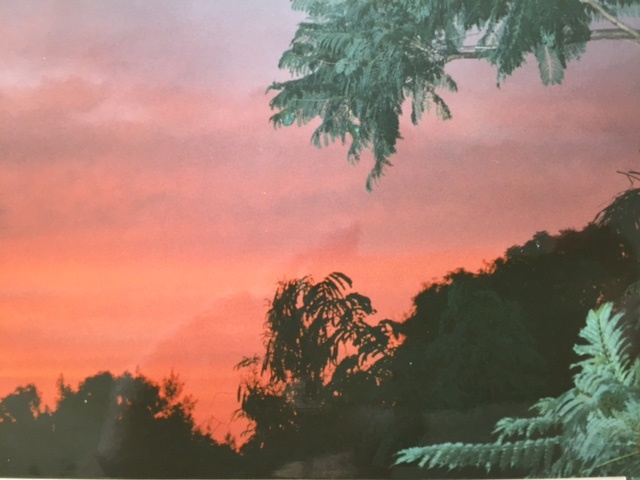
Sunset I’m still in the ‘research between drafts’ phase of writing, and over the last week I’ve been mainly reading, with a bit of watching! I’m reading Taken on Trust by Terry Waite, an articulate and in-depth account of his six years as a hostage. I have a list of other books about hostages, but this one seems to come up to the top of the pile every time. This account of almost three years as a hostage by Michael Scott Moore has also been useful, and probably closer to what I’m writing about than Waite’s experience, although perhaps the human psychology of captivity doesn’t vary with geography. I’d be interested to know if journalist Moore is writing a book of his own experiences.

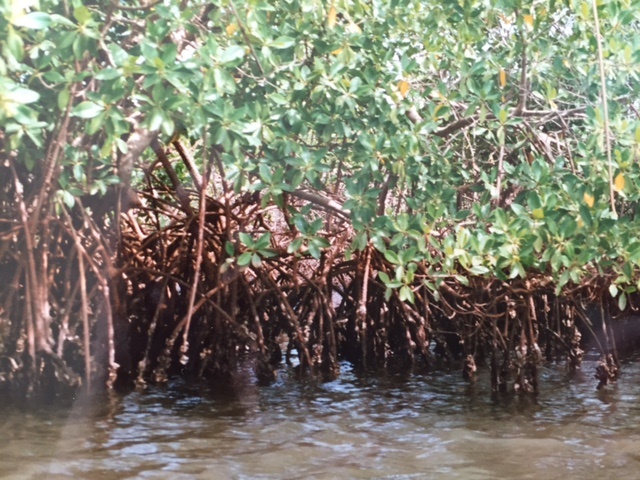
MangrovesI watched the film, Beasts of No Nation  based on the book by Uzodinma Iweala , the first Netflix original movie which was released in cinemas last Autumn. I’ve been reading about the film, getting mixed views on how well it covers the child soldier experience, but I watched it for information about the West African region. I think I may get the book to see how much more I can learn as so often much is lost when a book becomes a film. I’m interested in any other recommendations for books and films about West Africa, as it’s a while since I’ve been there … I did get out more photos (see above and left) to browse through, though, for more reminders and inspiration.


So, I’ve written a few hundred words of notes based on what I’ve watched and read, and I’ve listed some more of the scenes in the first draft, assessing them for whether they move the story on and how. I have a list of books about hostages which I’ll look for once I’m a bit further through Terry Waite. Work permitting, Thursday and Friday I’m mainly going to be reading! I’m making up for the lack of writing by writing blog posts  … last weekend I saw a great exhibition which I’ve reviewed. Still itching to start on the second draft, but I know I’m not there yet.

Review: David Jones and Pallant House

Last weekend I went to see the David Jones exhibition at Pallant House in Chichester. At the moment I seem to have the habit of only getting to exhibitions in their last few weeks … but you have until 21st February to visit, and it’s well worth it. The gallery has much more to it than I ever imagined, Chichester is lovely, and the David Jones exhibition is fascinating.

David Jones (1895-1974) is a modernist writer and artist. I first came across his somewhat impenetrable book, In Parenthesis when researching WW1 writing for my dissertation. In Parentheses, for all that some of it is difficult to read, does an amazing job of conveying written trauma, of addressing the impossibility of writing war experience in a linear and coherent way without diminishing the event. Jones has a breakdown after completing the work which was published in 1937.

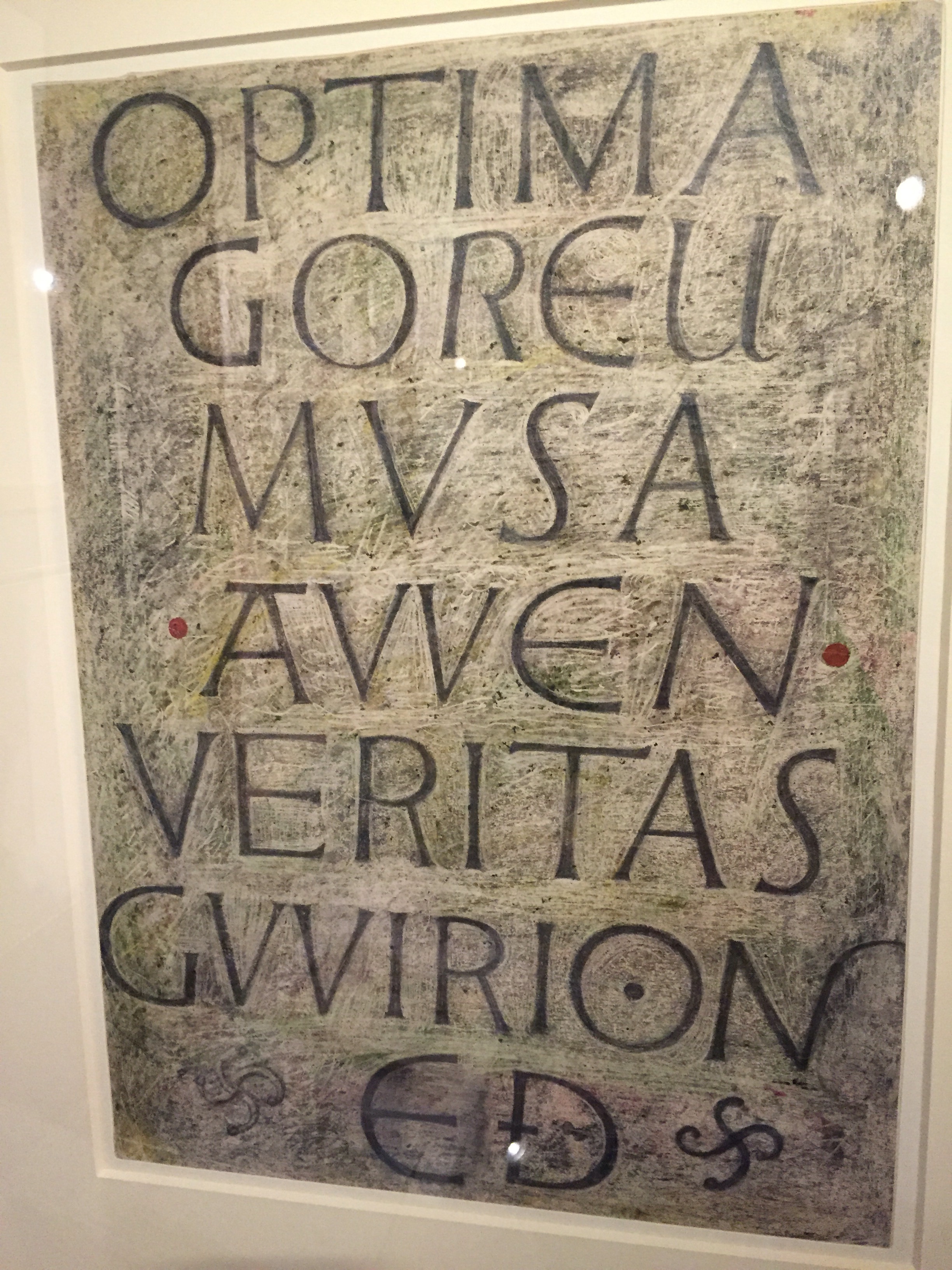
Some of the exhibition focussed on Jones’ war art, but there was much else. In his early work, which was much more realistic, he depicted homes, people and animals. Some of his later works are fascinating word pictures, mixing Latin and Welsh, scratched crayon or chalk, and different fonts. This one, right, translates as ‘Truth is the best muse’.

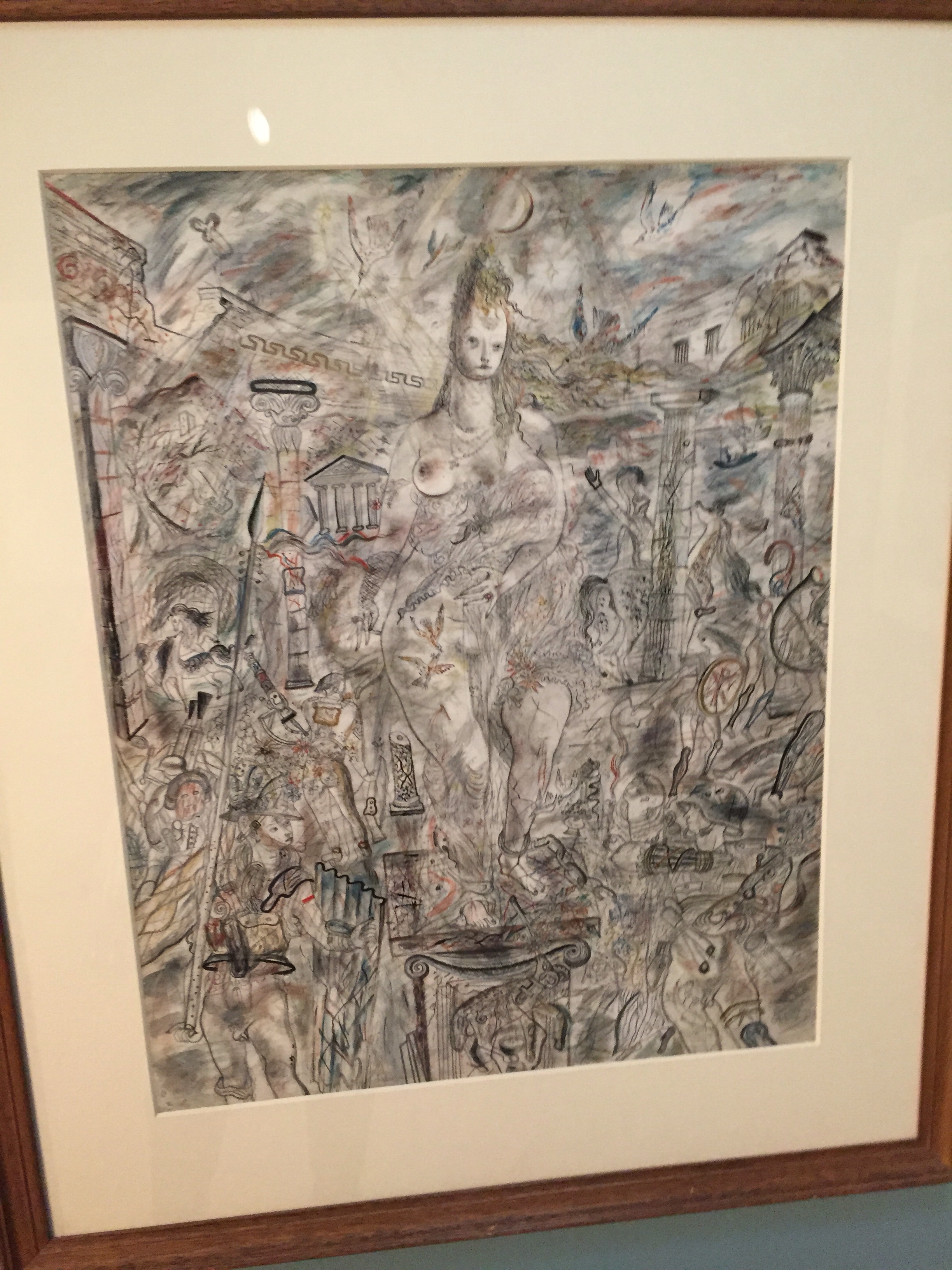
Another expression of Jones’ later work is the much less realistic drawings he did. Many of these involve flowers and trees that seem to grow across the canvas, mixing pen, pencil and watercolour in a crazy compilation of images.

The exhibition took us from Jones’ very first drawings – an impressive lion, age seven, through to the end of his life. It was beautifully curated, and everything that I’d hoped for. Had that been all I’d seen I’d have been happy, but we noticed that there was a tour at two o’clock as well. We stayed at the gallery for lunch in the restaurant (£14.95 for two courses, excellent food, and there is also a café. Go there in warmer weather and there is lovely outdoor seating.)

The curator took us round some of the exhibits from Pallant House’s extensive collections, many of which have been donated to the organisation. The majority of works were by British artists from the last century, with some European work.


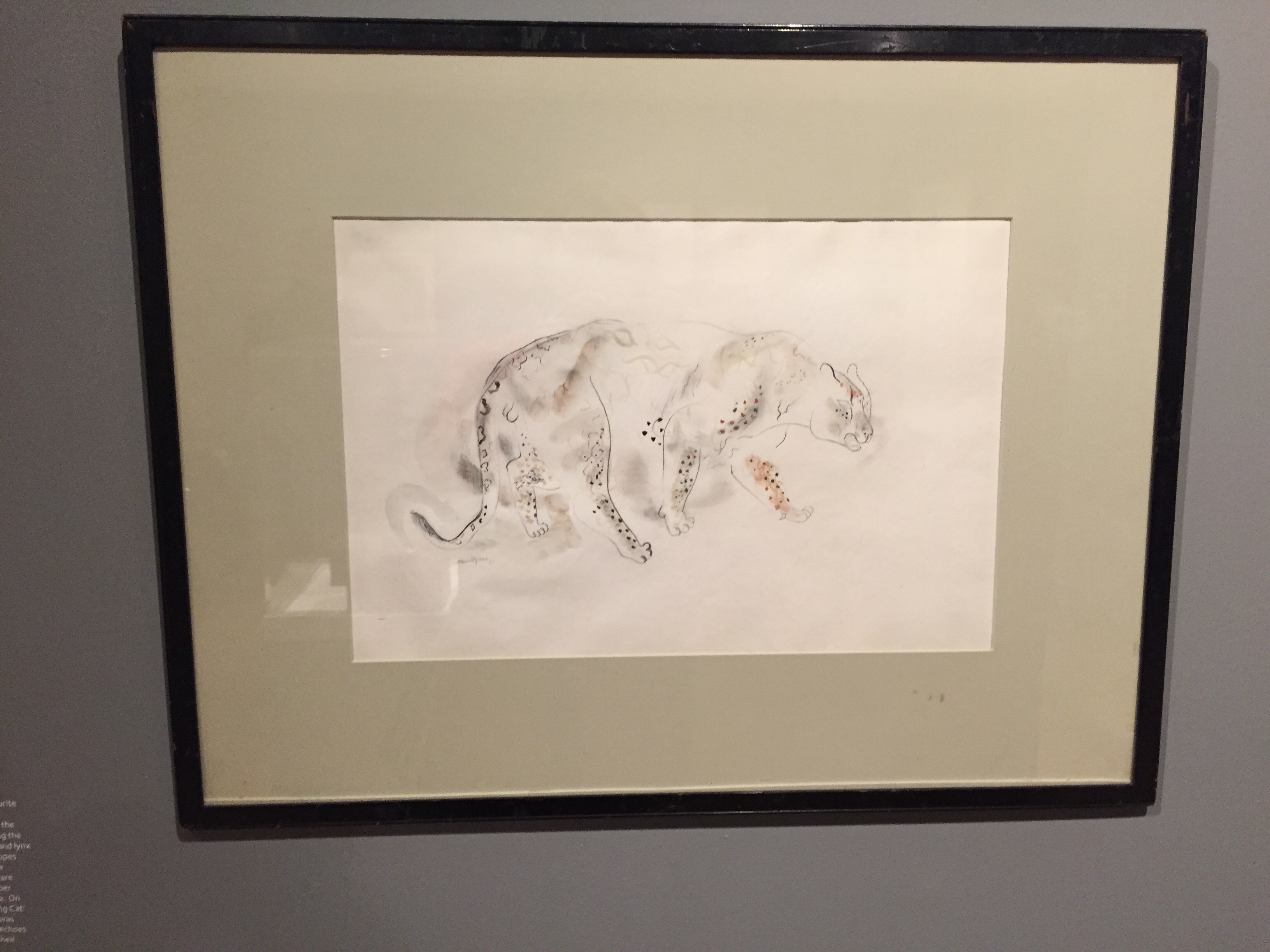
Cat, by David Jones

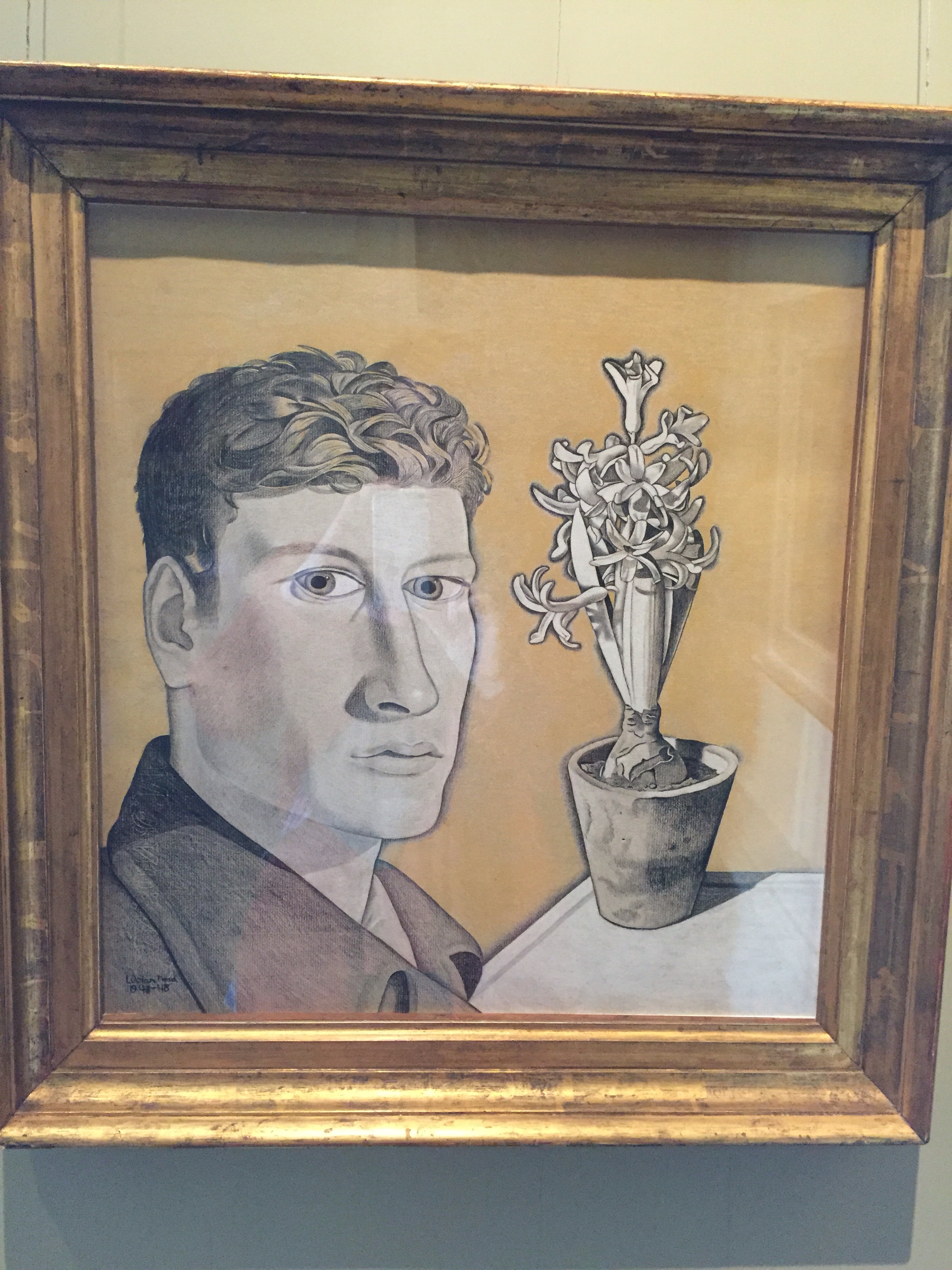
There was a gallery of portraits, including a self portrait of Lucien Freud, one of landscapes, and some of late twentieth century works. The person leading the talk knew plenty to keep us interested, and explained how Pallant House has been transformed from grand home to council offices to art gallery, and how in 2006 the large modern extension was built.


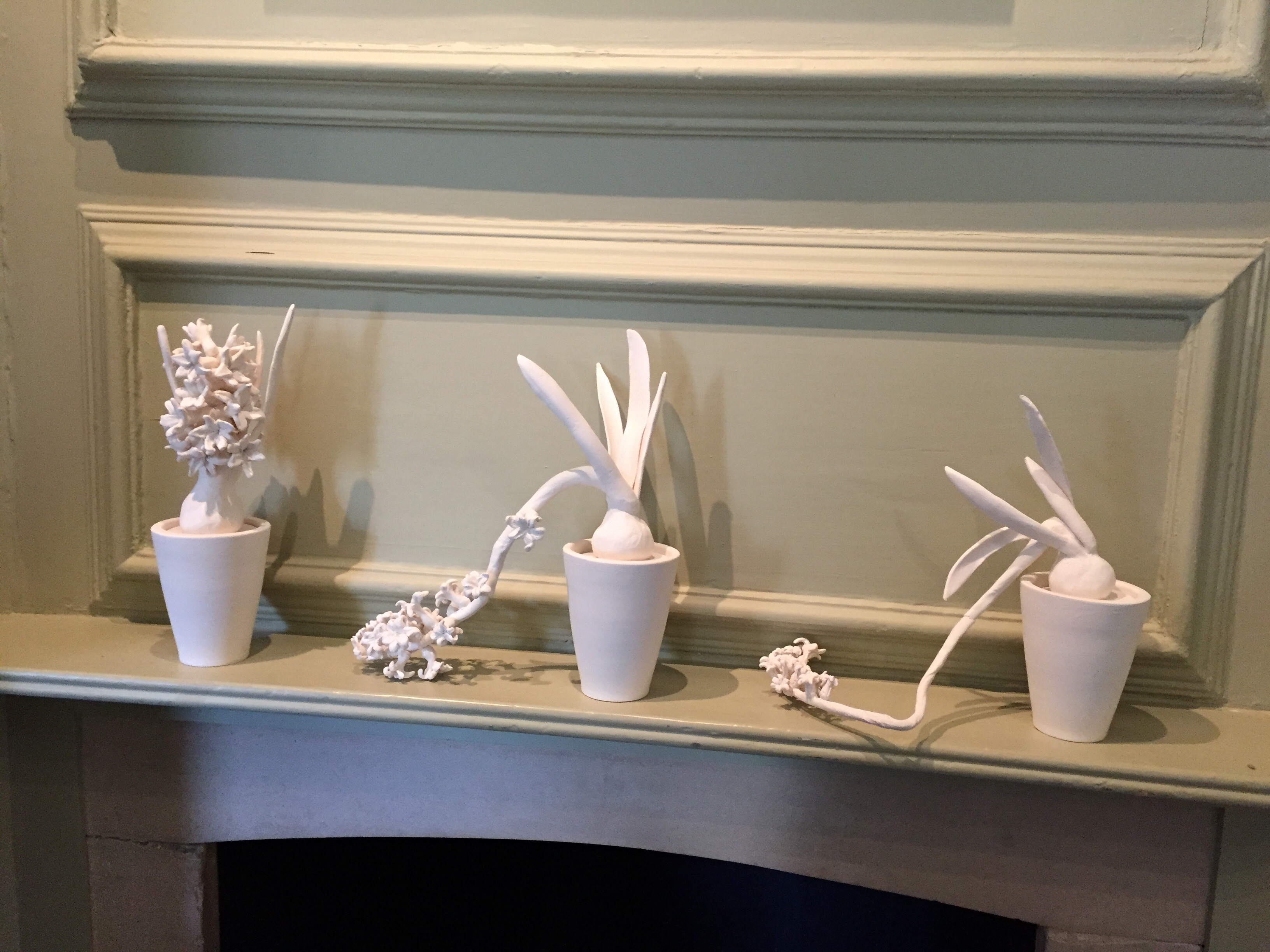
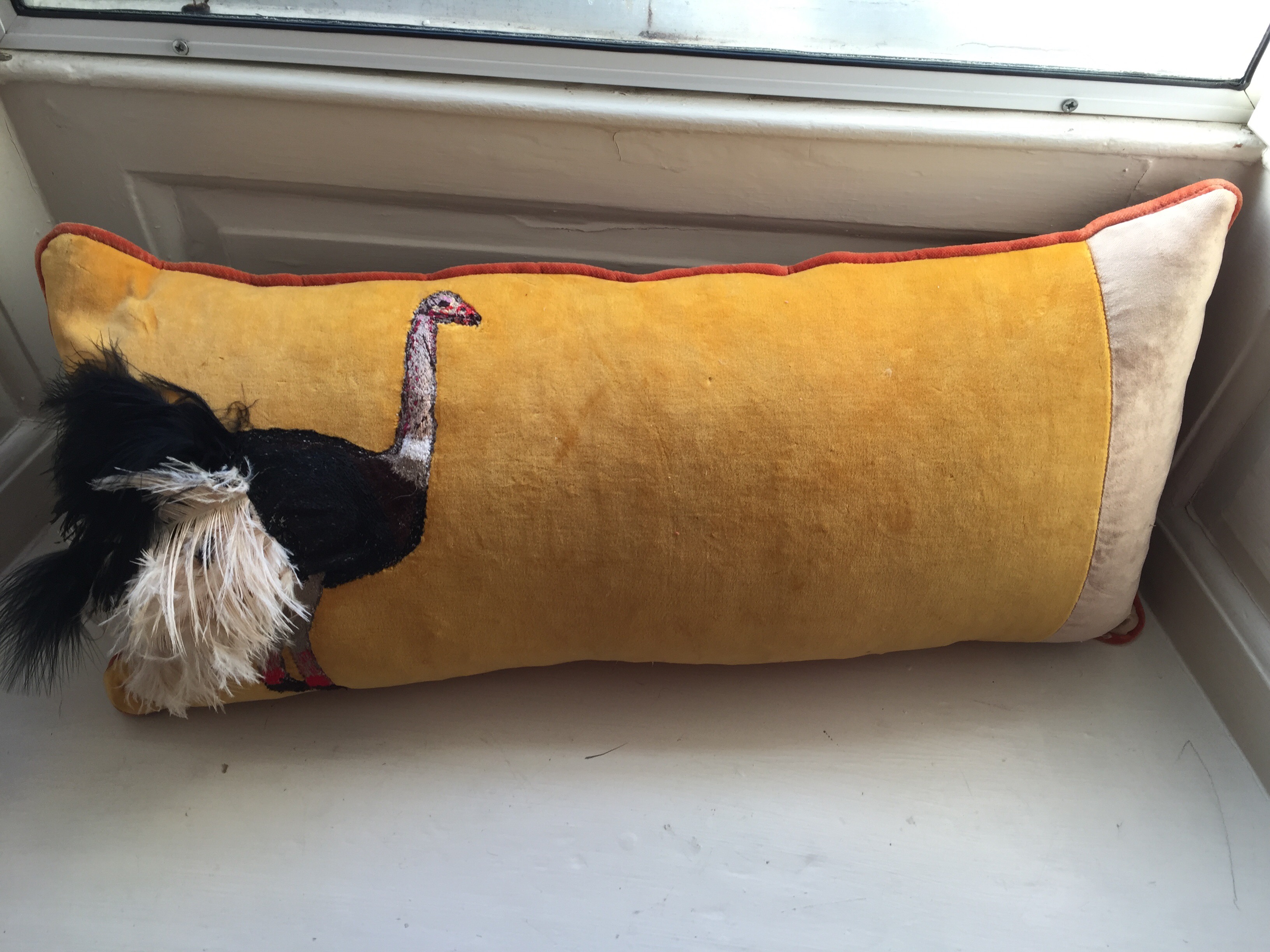
Alongside the works by well known and lesser known artists there were works from students and recent graduates from the art degree at Northbrook College. These works drew inspiration from the surroundings. I loved the ceramic hyacinths, placed alongside the hyacinths in the Lucien Freud portrait, and the fabric cushions and bird, inspired by the ostriches at the front of Pallant House.

If you do have a spare day at a weekend or over half term, do try and take the time to visit Pallant House.


Lucien Freud early pencil self portrait

Works by new artists emerging from Northbrook College

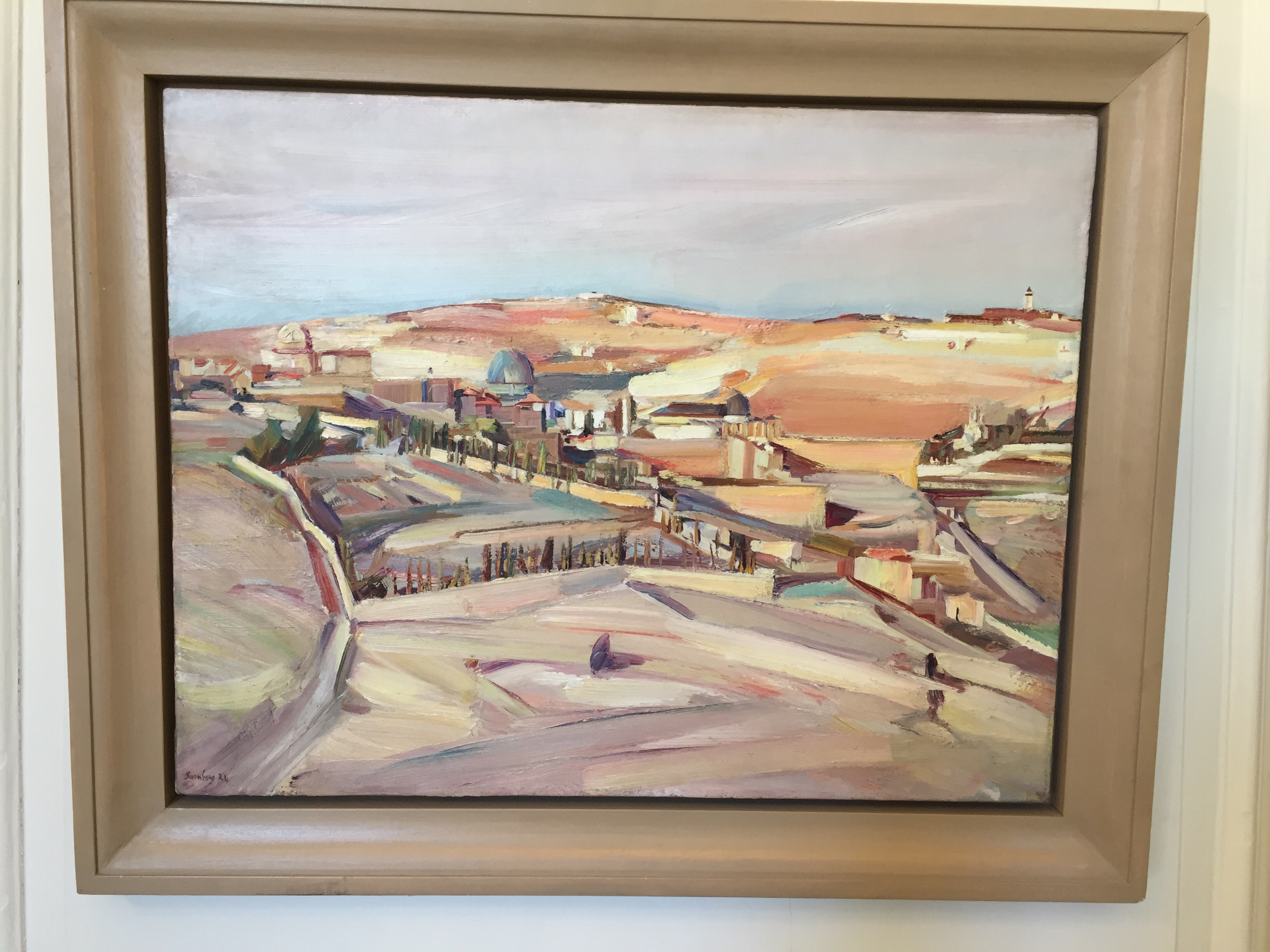
One of my favourite pieces, The South East Corner, Jerusalem, by David Bomberg


Find out more about visiting Pallant House.

Strange days indeed #whatimwriting

Writing is often hard. Right now I’m going through a difficult patch. I completed a first draft at the end of last year, and now I’m moving towards a second draft, as I mentioned last week. I have the story outline, and I’m listing scenes and working on what key actions happen in them: do they move the story on and do they really need to be there. I’m also reading for research (on being held hostage, in Africa, AND on the politics of aid and disability, if you have any recommendations.) But it’s strange. I like research, but I’m finding this intangible background searching a struggle. I want to be writing, making visible progress. So I’ve decided I’ll carry on like this through February and March, then in April I will push everything aside and start with my scene guide and a blank page and go for a second draft. In the past I’ve tweaked first drafts, made copious notes, and then stopped, but this will before the first total rewrite. I’m looking forwards to seeing what happens.

Review: Not if I see you first


I don’t generally review YA, but I’m writing about sight loss so couldn’t miss out on the chance to see how another author has dealt with this. Not If I See You First  by Eric Lindstrom tells the story of Parker, a fifteen year old, and her journey as she comes to terms with the loss of her father. So far, so conventional in the genre. The twist is that Parker is blind.

I know something about sight loss, probably more than most people, but it’s because I’ve studied it rather than experienced it. I’ve written a book about it, in fact, Sight Loss: The Essential Guide. I’ve worked with people with sight loss from the age of 15, but I still am not entirely qualified to determine if Lindstrom has  created an authentic piece, I don’t think anyone can truly understand sight loss without personal experience. Parker is, unlike most ‘blind’ people, entirely without sight: her optic nerves were severed in an accident when she was seven. The experience has left her spiky and defensive: she holds her close friends close, but has rules that she, and anyone who wants to be with her, have to live by. The rules run from one to eleven, plus there’s rule infinity.

Rule #1: Don’t deceive me. Especially using my blindness. Especially in public.

Rule #2 explains how not to touch Parker without warning, rule #3 highlights not to move her stuff, because she needs to be able to find it, rule #4 says, ‘Don’t help me unless I ask.’ and so on. Rule infinity is slightly different: ‘there are NO second chances… betrayal is unforgiveable.’ And this is where things get interesting. Parker’s high school has recently combined forces with another school, throwing her back into contact with kids she hasn’t seen since middle school, including one, Scott, who broke rule #1, and in doing so, smashed rule infinity too. Parker hasn’t spoken to him since.

Parker is quirky, and she’d rather attack than defend: she uses words like weapons, and throughout the book she begins to realise how this can keep more people at arms length than she might intend. She meets a nice guy, Jason, goes on a first date, and rows with her best friend when she starts to doubt how much Sarah is sharing with her. Lindstrom does a good job of tapping into the teenage mind with all its insecurities, adding in a heaping of extra worries that surface when you can’t see what’s going on and rely on other people to fill you in.

The characters are authentic – new girl Molly who buddies with Parker as she shares the same classes, Parker’s cousins Sheila and Petey who have been moved from their home town as Parker’s aunt and uncle move to take care of her. The plot speeds along at the perfect pace as we watch her deal with tensions with Scott, and decide that maybe she had been harsh in cutting him out of her life all together back when they were thirteen.

So, I’d say that this is a good read, with a twist of something different. It could certainly get teen readers to think a bit more about sight loss, while being carried along by a good story. Not If I See You First  costs from £7.99 at time of writing.

PS. Braille! Eric Lindstrom has liaised with the American Braille society in writing this book. There is Braille on the cover and in an end note. I reviewed the eBook, and I suspect that there may be a reason to get the print copy for the full experience. If you have the print copy and have checked out the Braille sections, let me know.

Midwinter writing retreat #whatimwriting

I’ve just spent a fabulous weekend at a writing retreat at the new home of the Sussex House Party.  Hosted by Gilly Smith and Jed Novick, the weekend was a great mix of good food, good company and great inspiration.

We arrived Friday night for a delicious Syrian inspired dinner with home cooked bread, and the chance to get to know the eight writers taking part. Some of us had come from Sussex, others from much further afield. Most people were in the midst of a big project like a novel, memoirs or a set of themed short stories.

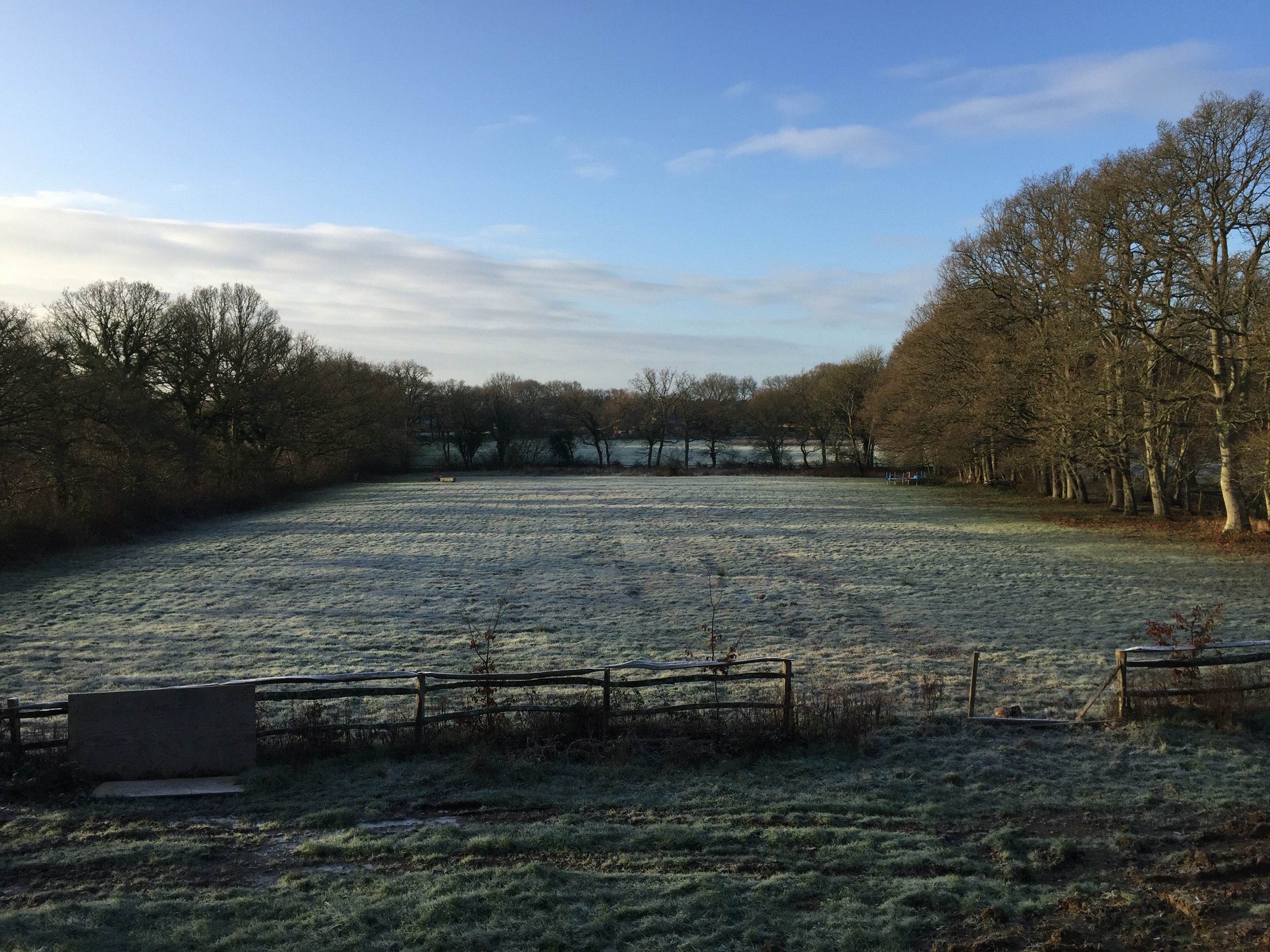
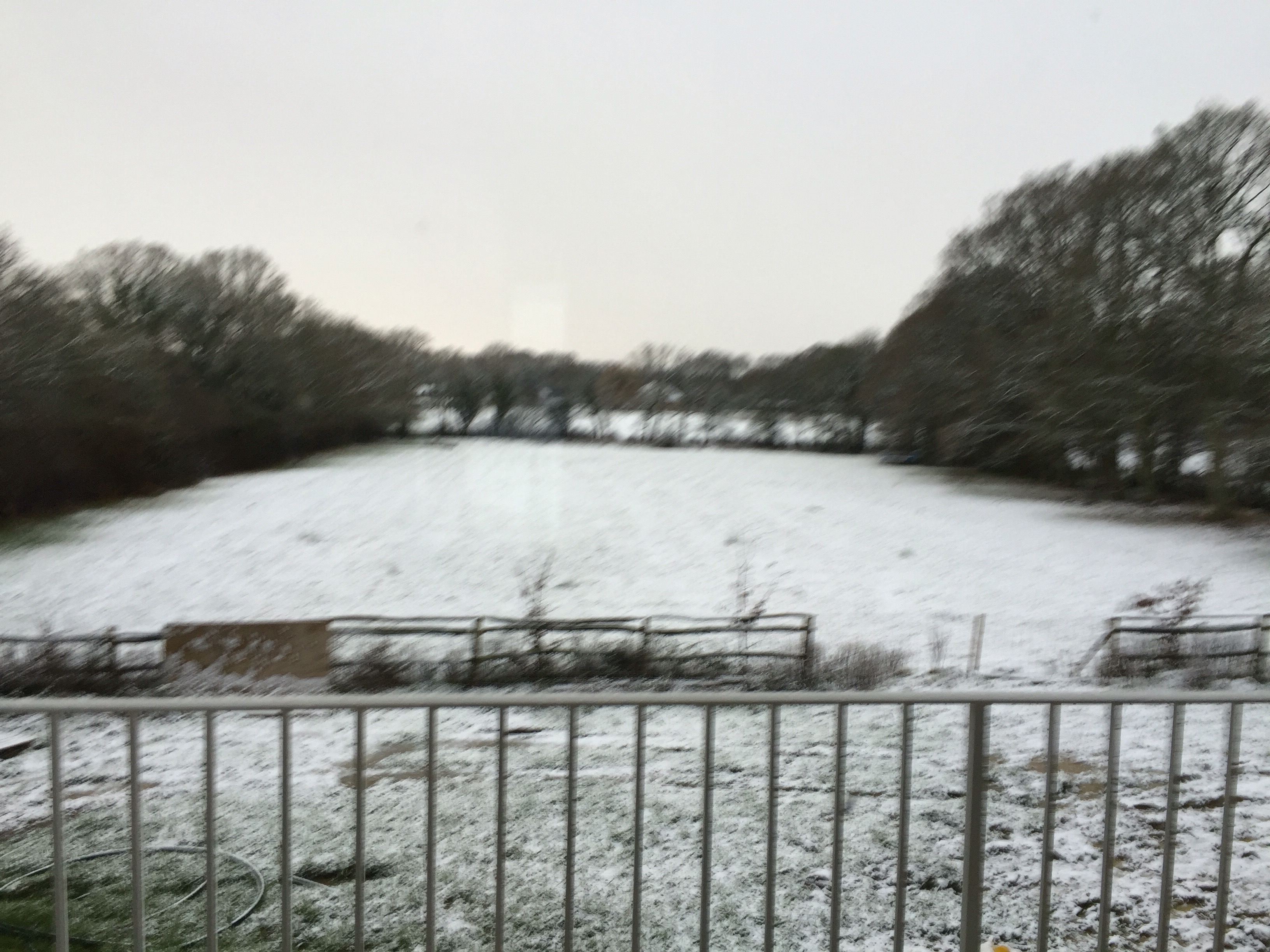
Saturday morning I woke to a beautiful view of the frosty Sussex countryside. A pheasant made its way slowly across the lawn, and I could hear Jed and Gilly’s dogs somewhere across the fields. A hot cooked breakfast was followed by an hour and a half of inspiration from Tom Connelly, author of The Spider Truces, a story about a father and son, spiders and growing up in Kent which is now top of my reading list. He spoke about his transition from film maker to writer, his writing successes and failures, and shared his advice to just keep writing.  (Tom reckons it takes him five years per book which helps me keep going!). Tom followed this with one to ones with each author.  He was gently interested in each person’s works and willing to share his own experiences.

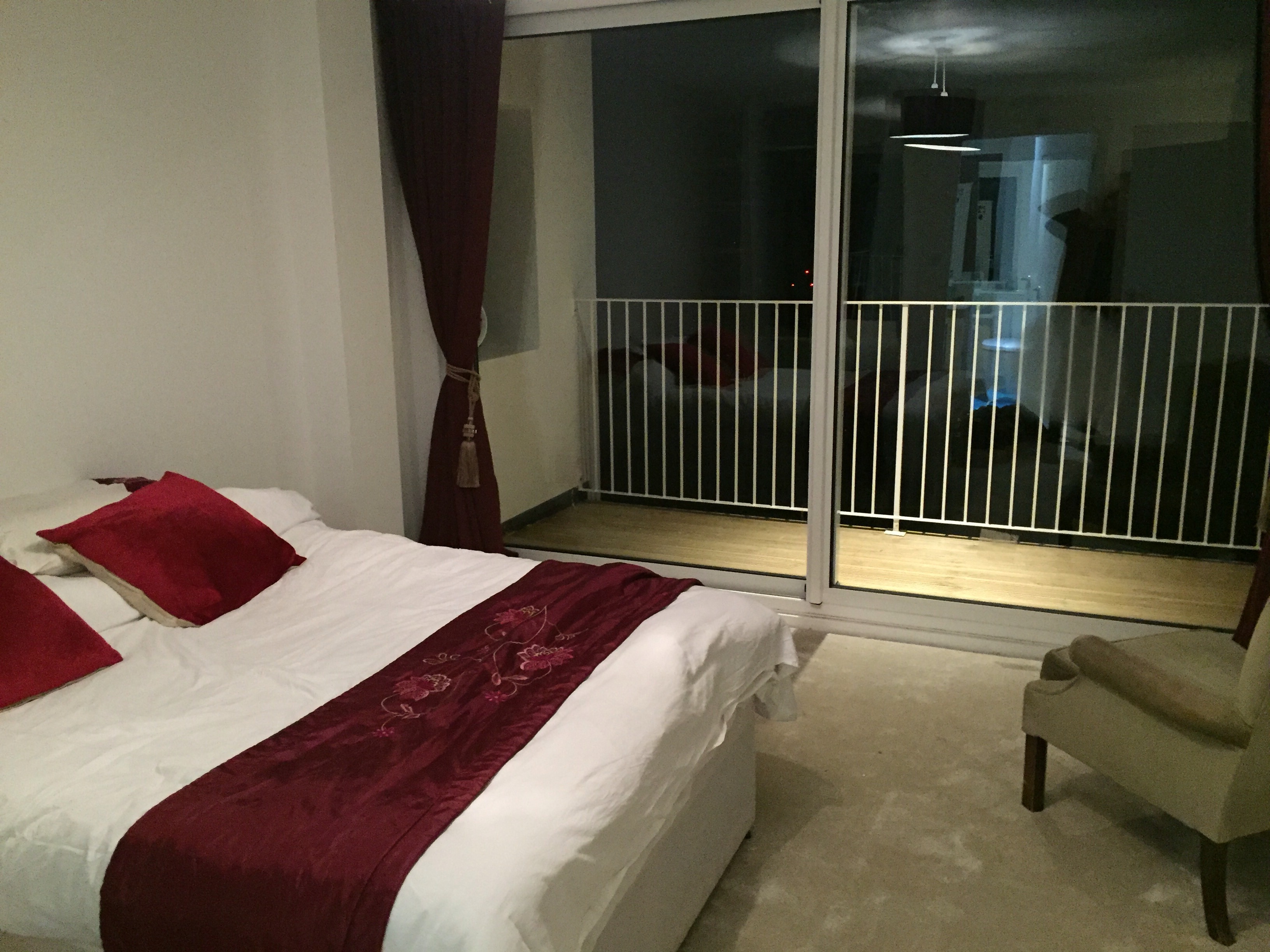
I spent the afternoon working in my room, a beautiful white walled room with touches of red and gold. It was a great place to get more deeply into the characters in my current book, which is set in London, West Africa and on the Kent coast. I discovered more about the motivation of the female lead character, what makes her behave the way she does, and what holds her back. I also drafted a couple of tricky scenes which although i wasn’t sure about them at the time have made a helpful contribution to the book as I look at them now.

The evening passed with wine and conversation and Gilly’s delicious cooking: it was a real treat to have someone else plan and prepare meals. We also got the privilege of hearing the first draft of Katie’s song about her father, which was very moving.

Sunday morning we woke up to snow so I went for  a quick walk round, making sure I got some fresh air and movement, however tempted I was to stay in and just write.

As I returned to the house, writer William Shaw was driving up. I’ve written about William’s Breen and Tozer series before, so it was great to get the chance to hear his take on writing. He was very focussed in the one-to-ones. While I might have asked him about his writing, he was clear that he was there to find out about what I was working on. It was reassuring to hear that he thinks I’m on the right track. And over lunch I did get to hear about his new book, The Birdwatcher which is out in May.

The weekend overall was truly special, and right now I’m trying to fend off the come down! Gilly and Jed are great hosts, the authors who came to speak to us were lovely people, and it was fabulous to hear the work and inspiration from the other writers taking part. At the end of the event, the feeling was very much, ‘When can we do this again?’, and I already have plans to meet up with and stay in touch with the supportive group that we formed.

Pluto

Review: 712 more things to write about


He’s still here. Still here. Still, lying in bed, but asleep, not dead.

Is your New Year’s resolution to write more? Or do you just want to get started with writing? I’ve found that regular writing, whether you do Julia Cameron’s Daily Pages from The Artist’s Way, or pick some other way to write every day, is the best was to clear writers block and get through to what you really want to write about.

This Christmas, my daughter gave me 712 More Things to Write About , a book full of prompts to inspire you to write. It is packed with ideas, and there is a fairly small space-from a quarter page to a whole page – for you to fill in with your writing. There are so many ideas that I have found it easy to open the book at random and pick one that appeals most days this year, even when the children were on holiday. The small space allowed means that you can fill it in a few minutes, so perfect for a commute, a lunch break or while you are waiting. the book itself is lovely quality, which I think adds to the inspiration.

Below, I have include an example of a prompt, and my response:

A woman travels continents and oceans to be at her dying father’s bedside and when he doesn’t die, even though she loves him, she’s disappointed. Why?

You’re still here. Still here. Still, lying in bed, but asleep, not dead.

I told you I loved you, over and over, when they said there was no hope. Somehow it seems that  you’re going to pull through, this time. Yet I don’t feel joy, just resignation, maybe even disappointment . This is going to happen again, I can see now. It’s the perfect way to make me put everything on hold and focus on you, exclusively, just like you always wanted.

I stand up, touch your hand, and say, “Goodbye Dad!”

 Sometimes I could do with more space, and in filling the slot feel that I have only just started a story, so if you had time this would be a good way to take the ideas that seem fruitful and expand on them. So, if you have had some book vouchers for Christmas, or simply want to invest in your writing, I’d very much recommend 712 More Things to Write About which is £12.99 at time of writing.